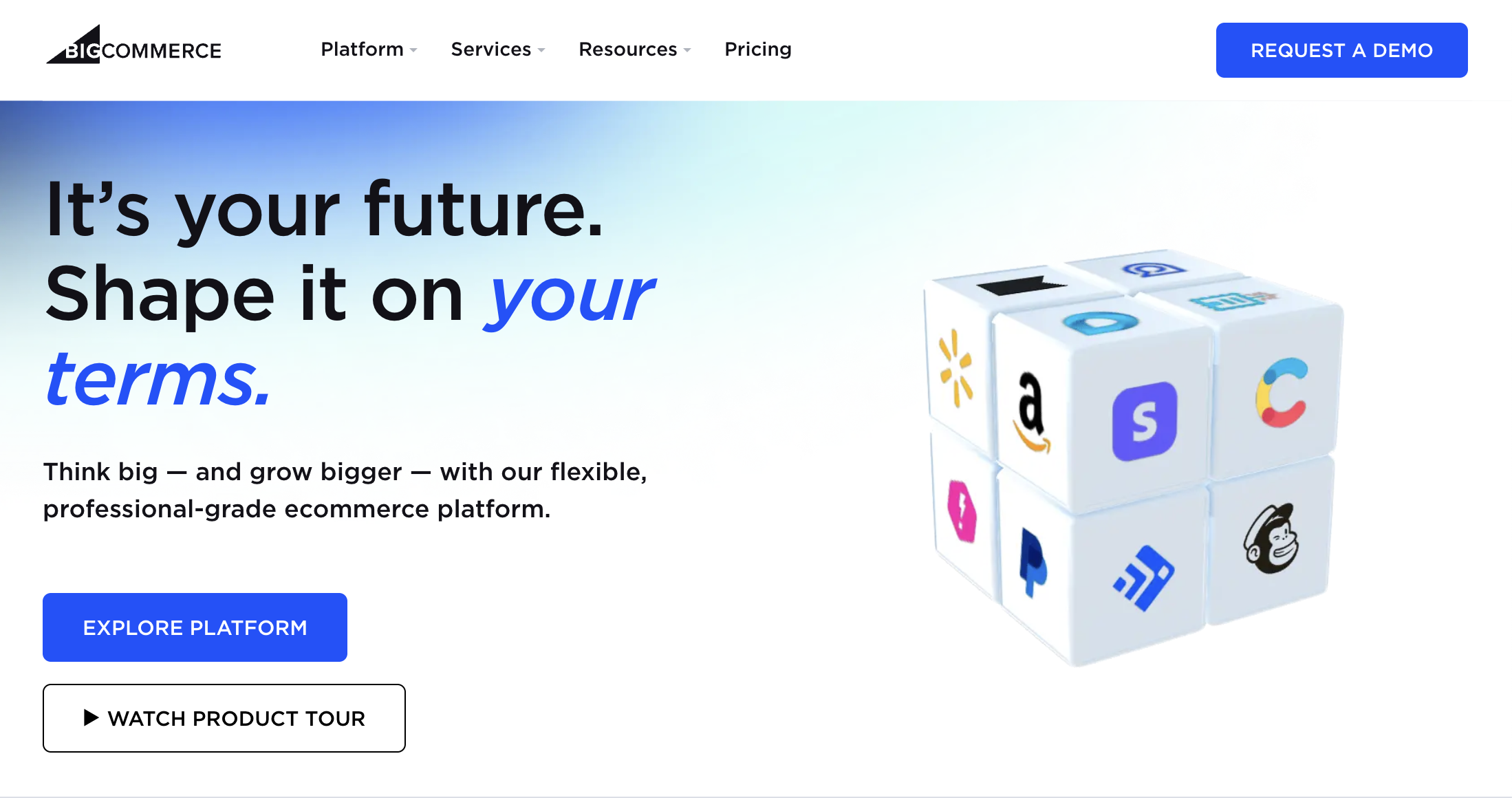
BigCommerce is one of the most established ecommerce platforms on the market, often mentioned alongside Shopify and WooCommerce. While it may not have the same brand recognition among beginners, BigCommerce has quietly built a reputation as a powerful and flexible ecommerce platform, particularly for growing businesses and B2B sellers.
In this in-depth BigCommerce review, we’ll explain what BigCommerce is, who it’s best for, how it compares to other ecommerce platforms, and whether it makes sense for your business.
What Is BigCommerce?
BigCommerce is a fully hosted ecommerce platform that allows businesses to build, manage, and scale online stores without managing their own infrastructure.
Unlike some platforms that started as website builders and added ecommerce later, BigCommerce was designed from the beginning to support serious online selling, including complex catalogs, advanced pricing logic, and multi-channel commerce.
BigCommerce Company Background
BigCommerce was founded in 2009 in Austin, Texas. From its early days, the company positioned itself as an ecommerce platform for growing and mid-market businesses rather than hobbyist sellers.
Over time, BigCommerce has focused heavily on:
- Scalability
- Native ecommerce features
- B2B and wholesale functionality
- API-first architecture
This focus has made BigCommerce especially popular with businesses that outgrow simpler platforms.
How BigCommerce Works
BigCommerce is a software-as-a-service (SaaS) ecommerce platform. This means:
- Hosting is included
- Security and updates are handled by BigCommerce
- You manage your store through a web-based admin dashboard
Store owners can use BigCommerce’s built-in tools or integrate third-party apps and custom systems through APIs.
Key Features of BigCommerce
BigCommerce is known for offering many advanced ecommerce features natively, reducing reliance on apps.
Product and Catalog Management
BigCommerce supports:
- Large product catalogs
- Complex product variants
- Bulk product uploads
- Custom product attributes
This makes it well-suited for stores with hundreds or thousands of SKUs.
B2B and Wholesale Features
BigCommerce is often considered one of the best ecommerce platforms for B2B.
Native B2B features include:
- Customer groups
- Custom price lists
- Tiered pricing
- Quote management
- Bulk ordering
Many other platforms require third-party apps for this functionality.
Checkout and Payments
BigCommerce offers:
- A fast, optimized checkout
- Support for multiple payment gateways
- No additional transaction fees on any plan
The checkout experience is flexible and conversion-focused, especially for larger stores.
Multi-Channel Selling
BigCommerce integrates with:
- Amazon
- eBay
- Google Shopping
This allows merchants to manage multiple sales channels from one platform.
API-First and Headless Commerce
BigCommerce is built with a strong API layer, making it a popular choice for:
- Headless ecommerce
- Custom frontends
- Complex system integrations
This is a major advantage for businesses with in-house development teams.
BigCommerce Ease of Use
BigCommerce is not difficult to use, but it is less beginner-friendly than Shopify.
The admin interface is clean and logical, but:
- There are more settings and options
- Terminology may feel advanced
- Initial setup can take longer
For users with ecommerce experience, this is a strength. For beginners, it can feel overwhelming.
BigCommerce Design and Themes
BigCommerce offers a selection of professional themes, both free and paid.
Pros
- Clean, modern designs
- Mobile-responsive
- Customizable
Cons
- Smaller theme library than Shopify
- Premium themes can be expensive
- Advanced customization often requires development work
BigCommerce App Ecosystem
BigCommerce has an app marketplace with integrations for:
- Marketing
- Payments
- Shipping
- Accounting
- ERP and CRM systems
However, the ecosystem is smaller than Shopify’s, which means fewer plug-and-play options for niche use cases.
BigCommerce Pricing Overview
BigCommerce uses tiered pricing based on features and annual sales volume.
Key considerations:
- Monthly subscription fees
- No additional transaction fees
- Automatic plan upgrades as revenue grows
This pricing model works well for growing businesses but can feel restrictive for some merchants.
BigCommerce Scalability
Scalability is one of BigCommerce’s strongest selling points.
The platform supports:
- High traffic volumes
- Large catalogs
- International storefronts
- Advanced integrations
Businesses can scale significantly without switching platforms.
BigCommerce SEO Capabilities
BigCommerce includes strong SEO features:
- Custom URLs
- Editable meta titles and descriptions
- Automatic sitemaps
- Clean code structure
SEO performance is generally strong when configured correctly.
BigCommerce Pros and Cons
Pros
- Excellent for B2B ecommerce
- Strong native features
- No transaction fees
- Highly scalable
- API-first architecture
Cons
- Steeper learning curve
- Smaller app ecosystem
- Less beginner-friendly
- Theme customization can be complex
BigCommerce vs Shopify
BigCommerce and Shopify are often compared, but they serve slightly different audiences.
Shopify
- Best for beginners
- Larger ecosystem
- Faster time to launch
BigCommerce
- Better for B2B
- More native features
- Stronger API flexibility
The right choice depends on your business model and technical comfort level.
Who Should Use BigCommerce?
BigCommerce is best suited for:
- B2B ecommerce businesses
- Companies with complex pricing needs
- Large catalogs
- Businesses planning headless or custom builds
- Teams with technical resources
Who Should Avoid BigCommerce?
BigCommerce may not be ideal for:
- First-time ecommerce entrepreneurs
- Very small stores
- Users wanting the simplest possible setup
Final Verdict: Is BigCommerce a Good eCommerce Platform?
BigCommerce is a powerful and capable ecommerce platform built for growth, complexity, and flexibility.
While it is not the most beginner-friendly option, it excels in areas where simpler platforms fall short, particularly for B2B ecommerce and businesses with advanced requirements.
If your business needs robust native features and long-term scalability, BigCommerce is absolutely worth considering.